

Tuesday briefing: ‘An historic rupture’ as the Middle East crisis spreads | United Arab Emirates
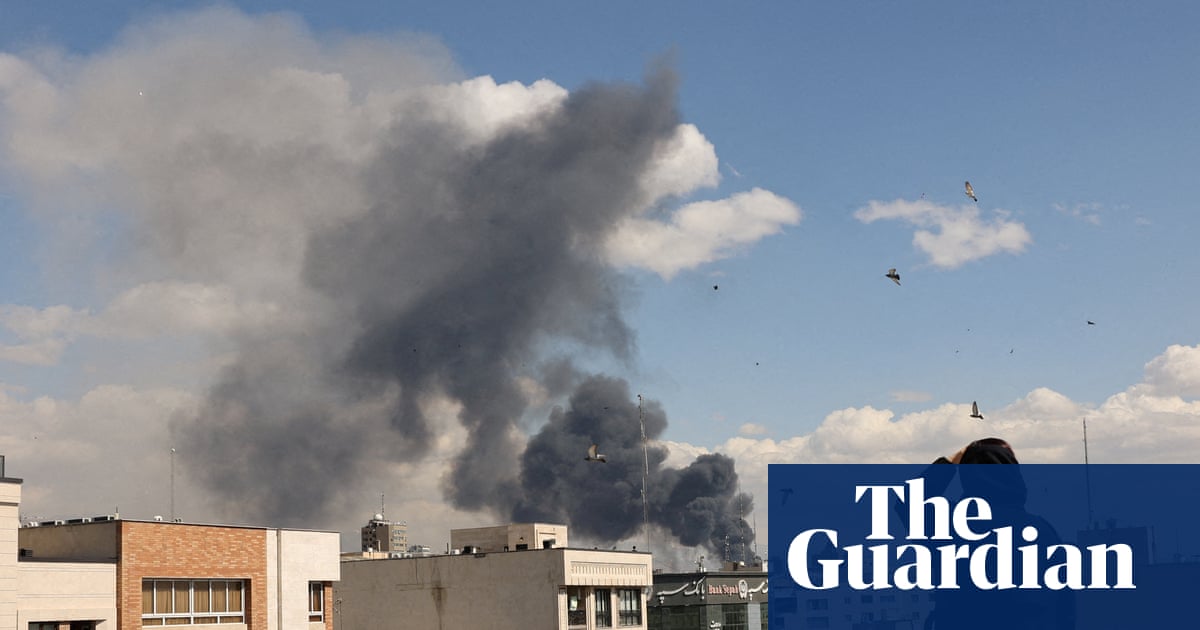
Good morning. The regional war many countries had long feared is here.
On Saturday, global attention turned to Iran after an extraordinary joint aerial assault by the US and Israel. The intense bombardment was followed with news of the assassination of the country’s supreme leader, Ayatollah Ali Khamenei, along with large numbers of Iran’s military and political leadership.
Before the world had time to absorb that shock, Iran retaliated, striking not only Israel and US targets but also its Gulf neighbours. There are reports of attacks on American military bases across the Gulf and the US embassy in Riyadh, as well as damage to civilian infrastructure such as hotels. Tens of thousands of Britons in the region are trapped in an increasingly dangerous and rapidly escalating situation. Markets and governments alike are bracing for potential spikes in oil and energy prices as the fallout spreads beyond the battlefield.
What happens next, and how much this conflict could escalate, is the question on many of our minds. To help unpack that, I spoke to Julian Borger, the Guardian’s senior international correspondent. That’s after the headlines.
Five big stories
-
Middle East | Israel’s determination to attack Iran and the certainty US troops would be targeted in response forced the Trump administration to take pre-emptive strikes, Marco Rubio said, in a new explanation for Washington’s surprise entry into the conflict.
-
Travel | More than 100,000 Britons were stranded in the Gulf on Monday, with airspace in the region still closed to most flights and overland evacuation regarded as risky.
-
UK politics | Nigel Farage has been accused of Donald Trump-style election denial by the Green party’s new MP for Gorton and Denton, after he claimed her Reform rival “came first” among British-born voters in last week’s byelection.
-
UK news | Scotland has become the first part of the UK to legalise hydrolysis, an environmentally friendly alternative to cremation or burial, reflecting increasing demand for more sustainable funeral arrangements.
-
Environment | UK programmes to protect nature and the climate in developing countries are suffering budget cuts despite ministers’ promises, the Guardian has learned.
In depth: A threat to stability across all of the Middle East
The US-Israeli bombing campaign inside Iran has been vast and intensive, with a swift, expansive response from Iran – rapidly taking the conflict beyond its initial targets, drawing in countries across the Middle East.
Hours after the US-Israeli attack, Iranian missiles and drones were launched at Israeli and American bases across the Gulf – including in Qatar, Kuwait, Jordan, the United Arab Emirates and Bahrain.
In a joint statement, Gulf states alongside the US strongly condemned what they described as Iran’s “indiscriminate and reckless missile and drone attacks”, warning they threatened wider regional stability.
“This moment is one of those you think has been coming for a long time and everyone has braced for it, but when it actually happens it still feels extraordinary,” Julian Borger says, describing the assassination of Ayatollah Ali Khamenei, who dominated Iranian politics for 36 years, as “an historic rupture”.
Uncertainty remains about his successor, the capacity of any opposition to take control of the state, and the ultimate objectives of the US and Israel. Borger told me of his fears for ordinary Iranians, caught between an authoritarian regime and sustained US-Israeli bombardment. “If the country fractures, you could see a Libya-style collapse,” Julian says. “Iran is a large multi-ethnic state with disparate regions: Baluchis, Arabs in the south-west, and other minorities. There are separatist movements, and external powers may encourage them.”
Why is Iran targeting the Gulf?
Julian says Iran has targeted the Gulf, in part, to build international pressure on the US. “Iran is trying to impose costs on the United States indirectly,” he explains. “The hope is that Gulf governments will pressure Washington to stop.”
At the same time, Iran has sought to reassure neighbouring states that they are not the intended enemy. As Julian puts it, Iran’s message is: “This isn’t about you, it’s about America and Israel.” But, he adds: “It’s a high-risk strategy because it risks turning Gulf states against Iran entirely. Instead of blaming the US or Israel, they start seeing Iran itself as the main threat.”
While damage to infrastructure has been limited, the attacks threaten an image the Gulf has spent decades and billions constructing – as a beacon of wealth and stability. Now, a UN nuclear expert is warning that the mass evacuation of cities across the Middle East may be necessary if civil nuclear power stations are attacked, as this could lead to radiological release.
“The Gulf sells itself as a sanctuary with western money, western expatriates and absolute stability,” Julian explains. “The image it projects is that nothing bad happens here, but attacks puncture that.”
The UK Foreign Office is drawing up contingency plans to evacuate tens of thousands of British citizens should the conflict escalate further. Many Britons remain stranded in Dubai and elsewhere across the region.
If the fighting can be contained, Julian says Gulf states may recover quickly. “But if it drags on, that reputation for safety takes a real hit.”
And the conflict has gone beyond the region. Iranian drones have been launched at RAF Akrotiri base in Cyprus. Soon after, the UK, France and Germany said they had launched defensive action to protect their interests in the region and their Gulf allies.
What is the impact on the US?
So far, Iranian attacks have inflicted limited direct damage on the US. Six American soldiers have been killed, and three US aircraft have been shot down, reportedly from friendly fire.
“For years, American planners war gamed this scenario,” Julian says. “Every time they ran those simulations, at least one American warship sank. The assumption was that Iran would unleash massive drone swarms, aerial drones, underwater drones, surface drones, overwhelming US defences. That hasn’t happened yet.”
What is clear is that Washington seems to have little appetite for a prolonged conflict. “Donald Trump treats politics episodically,” Julian says. “Each crisis becomes another instalment of the Trump show. He will want a quick ending that he can present as victory.”
As the conflict widens, events may quickly move beyond the control of any single actor. “But it doesn’t take much going wrong for public opinion to turn. Approval for this operation is already low.”
At the same time, the US will be closely watching how much pressure its Gulf allies are willing to absorb. There have been conflicting reports about Saudi Arabia’s position: the Washington Post reported that Riyadh had lobbied in favour of military action, a claim Saudi officials swiftly denied.
What is the cost of war?
The economic consequences of the conflict are already rippling far beyond the battlefield. “Insurance markets and shipping companies are extremely risk-averse. Even the perception of danger raises prices immediately,” Julian says.
Iranian strikes have been reported in Saudi Arabia, where officials said a fire at an oil refinery is “under control”, and at a major gas processing plant in Qatar. Both facilities have halted production, which could disrupt energy supply.
Gas prices surged sharply, at one point rising by as much as 42% in Europe, as traders priced in the risk of a prolonged conflict in one of the world’s most critical energy corridors.
“Iran is targeting energy infrastructure because Trump is already politically vulnerable on cost of living issues,” Julian says. “A new oil shock would be damaging.”
And, of course, there is the human toll. The Iranian Red Crescent Society says at least 555 people have been killed in US-Israeli attacks across 131 cities since Saturday. Israel has reported 10 deaths from Iranian attacks and there have been three fatalities in the Gulf.
On Monday, Hezbollah launched missiles and drones toward Israel in retaliation for the killing of Khamenei. Israeli airstrikes on Beirut and southern Lebanon (pictured above) killed at least 31 people and injured 149 others, according to Lebanon’s health ministry.
For now, Julian said, there are no clear signs the Iranian regime is collapsing. “Trump’s message was essentially: we bomb, then the people rise. Whether that happens remains uncertain.”
What else we’ve been reading
-
Formerly of this parish, Archie Bland writes – in gentle praise and no little relief – on the return of Ms Rachel, the queen of children’s edutainment. Martin
-
If you weren’t already concerned about AI and the absence of meaningful oversight, you will be after reading this chilling piece by a member of Meta’s oversight board. Aamna
-
The tech talk is a bit beyond me, but I was still fascinated by this blog post, about someone using data to empirically prove the longest line of sight on Earth – it is between the Himalayas and Pik Dankova in Kyrgyzstan. Martin
-
There will be plenty of analysis of the extraordinary events unfolding in the Middle East. But sometimes a single image, like Jason White’s cartoon about the US-Israel strikes on Iran, captures it more sharply than a thousand words. Aamna
-
“Part modern circus, part dance, part cabaret” – Imogen Tilden explores the impressive-sounding immersive theatre production Walk My World in Budapest. Martin
Sport
Football | Jurriën Timber says Arsenal’s players can feel the anxiety of the Emirates Stadium crowd and must find a way to handle it as they chase a first Premier League title since 2004.
Football | Tributes are being paid after the death of the trailblazing footballer Lynda Hale, who scored in England’s first official women’s international fixture.
Six Nations | Steve Borthwick is ready to radically overhaul his misfiring England side for the Six Nations clash against Italy on Saturday, with Fin Smith expected to be handed the No 10 jersey.
The front pages
“Fears grow as Iran conflict spreads across Middle East” is the Guardian top story. The FT splash says “Iran turns fire on global energy supply” and the Mirror has “Middle East in flames”. The i paper leads on “Starmer and Trump clash on Ayatollah’s assassination and war with Iran”, the Telegraph has “I am very disappointed in Keir” and the Sun frames it as “Inaction this day”. The Mail headlines on “US lambasts ‘hand-wringing, pearl-clutching’ Starmer as Kemi says he’s ‘scared’ of his own voters”, and the Times has “Big strike coming, says US”.
Today in Focus
Chaos in the Gulf
After the US and Israel assassinated Iran’s supreme leader, Tehran has hit back. Missiles have rained down on the Gulf. Will the region retaliate? Julian Borger reports.
Cartoon of the day | Ben Jennings
The Upside
A bit of good news to remind you that the world’s not all bad
Half a century after his last UK visit, the Japanese guitar legend Masayoshi Takanaka is finally returning – and demand has been so intense that his London date was upgraded to Brixton Academy to fit the crowds. Takanaka (pictured above with his signature guitar) first toured the UK in 1972 with Sadistic Mika Band, before building a hugely successful solo career at home.
Now, streaming and viral clips have won him global acclaim, and led to sold-out shows and festival slots on a tour that has taken him to the UK, US, Australia and New Zealand. “In Japan, most of the people at my shows are in their 50s, 60s or 70s,” he says in this interview. “But in LA, most people were in their 20s. You could really feel their energy, and hear the audience cheering so loud. It got me really emotional.”
Sign up here for a weekly roundup of The Upside, sent to you every Sunday
Bored at work?
And finally, the Guardian’s puzzles are here to keep you entertained throughout the day. Until tomorrow.
Source link
